
I. Introduction to British Tea Traditions
Tea holds a profound cultural significance in Britain, woven into the fabric of daily life and social customs. However, the terminology surrounding British tea traditions often leads to confusion, particularly with the terms “high tea” and “afternoon tea.” Many incorrectly use these interchangeably, unaware of their distinct origins and characteristics. This article will delineate the distinct characteristics of afternoon tea and high tea, exploring their origins, typical menus, and social contexts.
II. Deciphering Afternoon Tea: A Genteel Tradition
Origin and Purpose of Afternoon Tea
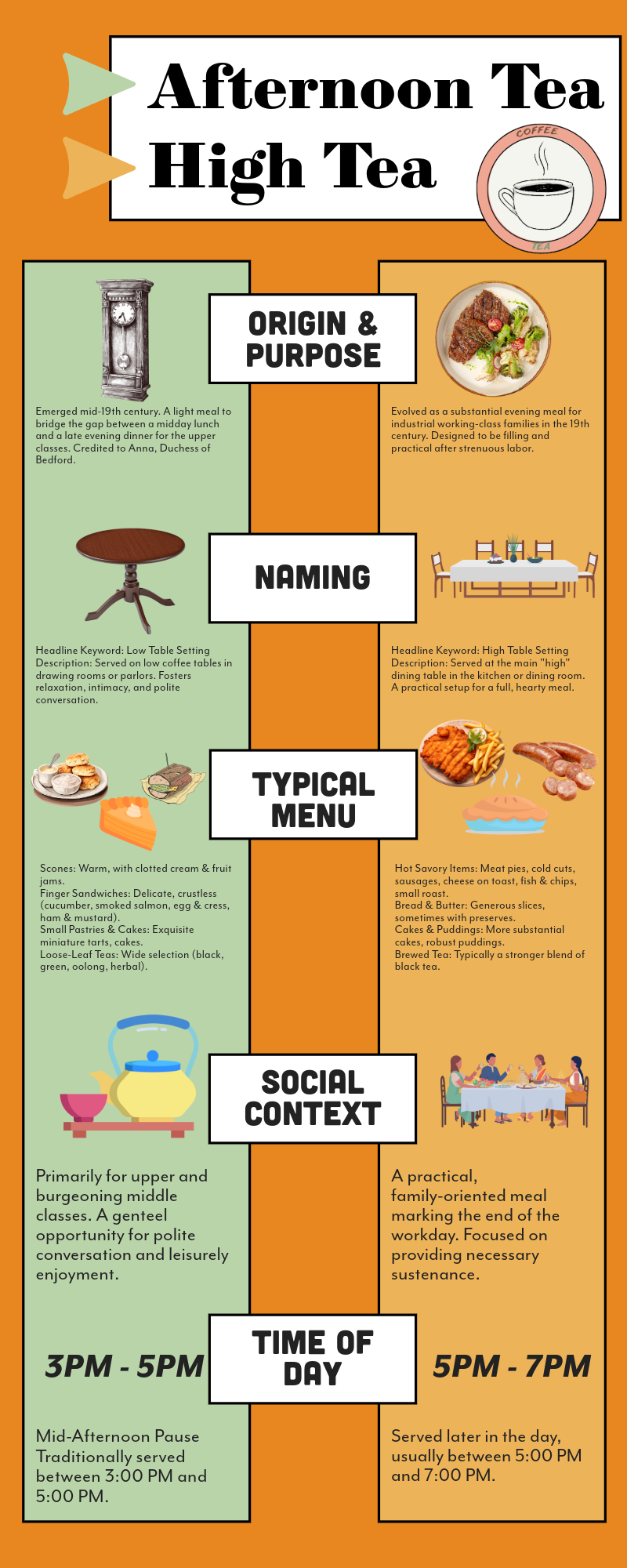
Afternoon tea historically emerged as a light meal designed to bridge the considerable gap between a midday lunch and a late evening dinner, which for the upper classes could be as late as 8 or 9 PM. This delightful tradition is widely credited to Anna, the Duchess of Bedford, in the mid-19th century, who found herself experiencing a “sinking feeling” in the late afternoon and began requesting tea and small bites.
The “Low” in Afternoon Tea
The very name “afternoon tea” often carries a subtle clue about its traditional setting: the “low” refers not to its social status, but to the furniture around which it was served. Historically, afternoon tea was enjoyed in drawing rooms, parlors, or boudoirs, where guests would recline on comfortable sofas and armchairs. The accompanying tables were typically low coffee tables, or “tea tables,” designed to be easily accessible from a seated, relaxed position. This arrangement fostered an atmosphere of ease and intimacy, encouraging informal yet refined conversation.
This emphasis on low tables underscored the relaxed and informal, albeit still highly refined, nature of the occasion. Unlike the formal dining room setting of a main meal, afternoon tea was a less rigid affair, allowing for more leisurely interaction and comfortable enjoyment of the refreshments. The low setting promoted an environment of geniality and quiet contemplation, distinguishing it from the more structured dining experiences. It was a time for graceful repose, where comfort and conviviality took precedence, making the “low” aspect a key identifier of this genteel tradition.
Typical Menu for Afternoon Tea
The quintessential afternoon tea is presented on an elegant three-tiered stand, offering a specific array of delicacies:
- Scones: A non-negotiable component, served warm with clotted cream and a selection of fruit jams (strawberry being the most classic).
- Finger Sandwiches: Delicate, crustless sandwiches with various fillings, such as cucumber, smoked salmon, egg and cress, or ham and mustard.
- Small Pastries and Cakes: An assortment of exquisite miniature pastries, tarts, and cakes, often reflecting seasonal ingredients.
- A Selection of Loose-Leaf Teas: A wide choice of black, green, oolong, and herbal teas to complement the food.
Social Context of Afternoon Tea
Afternoon tea was primarily a social occasion for the upper and burgeoning middle classes. It provided a gentle opportunity for ladies (and gentlemen) to gather, engage in polite conversation, and enjoy a leisurely afternoon, often before heading out for evening engagements.
III. Unpacking High Tea: A Heartier, Working-Class Meal
Origin and Purpose of High Tea
In contrast to the leisurely afternoon tea, high tea evolved as a substantial evening meal for working-class families in the industrial 19th century. After a long day of strenuous labor, families needed a filling and practical meal to sustain them. High tea was designed to be much more hearty and satisfying than the delicate fare of afternoon tea.
The “High” in High Tea
Just as the “low” in afternoon tea referred to the low tables it was served upon, the “high” in high tea similarly refers to the setting in which it was consumed. Unlike the drawing-room coffee tables of the gentry, high tea was traditionally served at the main dining table – a “high” table – in the kitchen or dining room. This distinction is crucial to understanding its function.
Serving high tea at a proper dining table underscored its role as a principal meal rather than a light refreshment. Families would gather around this table, often after returning home from work, to partake in a substantial spread. The high table facilitated the consumption of a full meal, complete with hot dishes, cutlery, and perhaps even second helpings, a stark contrast to the delicate bites of afternoon tea. It was a practical setup for a practical meal, reflecting the need for comfort and efficiency after a long day. This simple difference in table height symbolically, and practically, differentiated high tea as a more robust and functional dining experience, a central family meal designed for nourishment and replenishment.
Typical Menu for High Tea
The menu for high tea was considerably more robust and less refined than afternoon tea, focusing on sustenance:
- Hot Savory Items: Often included dishes like meat pies, cold cuts, sausages, cheese on toast, or even heartier fare such as fish and chips or a small roast.
- Bread and Butter: Generous slices of bread and butter, sometimes accompanied by preserves.
- Cakes and Puddings: While cakes might be present, they were often more substantial, and robust puddings were common.
- Brewed Tea: Typically a stronger blend of black tea, serving as a refreshing accompaniment to the hearty meal.
Social Context of High Tea
High tea was a practical, family-oriented meal, marking the end of the working day. It was less about social etiquette and more about providing necessary sustenance for families, often serving as the main evening meal.
IV. Key Distinctions and Overlap Between High Tea and Afternoon Tea
While both are British tea traditions, their differences are fundamental:
Time of Day
One of the most immediate and defining differences lies in the time of day they were traditionally served. Afternoon tea is characteristically a mid-afternoon affair, typically served between 3:00 PM and 5:00 PM. It was conceived as a light refreshment to bridge the gap between a late lunch and an even later dinner. Its timing reflects its leisurely nature, a pause in the day for gentle refreshment.
In contrast, high tea is served later in the day, usually in the late afternoon or early evening, often between 5:00 PM and 7:00 PM. This later timing underscores its role as a substantial evening meal, intended to be eaten after the workday had concluded, replacing or combining with the traditional supper. It was a meal to re-energize after a day of physical exertion.
Setting and Furnishings
The physical setting and the furniture used are also crucial indicators of their distinct identities. Afternoon tea was invariably served in drawing rooms or parlors, characterized by their comfortable, relaxed ambiance. The refreshments were laid out on “low” coffee tables or small occasional tables, allowing guests to recline in sofas and armchairs while they partook. This low setting facilitated a genteel, informal, yet refined social gathering.
Conversely, high tea was consumed at a “high” dining table, typically in the kitchen or dining room. This utilitarian setting reflected its function as a main meal, requiring standard dining chairs and a table suitable for a full spread of food and cutlery. The high table was practical for eating a hearty meal, accommodating families after a day of labor.
Menu and Substance
Perhaps the most significant distinction lies in the menu and the overall substance of the food offered. Afternoon tea is characterized by its lightness and delicacy. The menu is typically composed of three main elements: delicate finger sandwiches (crustless, with various fillings), warm scones served with clotted cream and jam, and an assortment of small, exquisitely crafted pastries and cakes. The portions are small, designed for elegant consumption, and the focus is on refined flavors and presentation. The accompanying tea is often a lighter, more aromatic blend.
High tea, on the other hand, is a far more robust and substantial meal. Its menu reflects its purpose as a primary source of sustenance. It commonly features hot savory dishes such as meat pies, cold cuts, cheese, sausages, or even fish and chips. Bread and butter are plentiful, and desserts are often heartier, like fruit crumbles or large slices of cake, rather than dainty pastries. The tea served with high tea tends to be a stronger, more invigorating brew, chosen to complement the heavier food.
Social Class and Purpose
The social stratification associated with each tradition is a fundamental differentiator. Afternoon tea originated as a leisure activity for the aristocratic and upper-middle classes. Its purpose was primarily social – an opportunity for polite conversation, elegant entertainment, and a display of refinement and leisure time. It was an indulgence, a graceful pause in the day for those not engaged in manual labor.
High tea emerged as a practical, functional meal for the working class. Its purpose was sustenance – to provide a hearty and filling meal after a long day of physical work. It was a family-oriented occasion, less about social etiquette and more about nourishment and providing comfort after a day’s toil. It represented a necessity rather than a luxury.
Modern Interpretations
In contemporary society, the lines between these two distinct traditions have undeniably blurred. Many modern establishments, particularly hotels, tearooms, and cafes, often use the term “high tea” to describe what is, in essence, a luxurious afternoon tea experience. This can lead to confusion, as these offerings typically feature the tiered stands, delicate sandwiches, scones, and pastries characteristic of traditional afternoon tea, sometimes with the addition of a sparkling wine or champagne. They may also include one or two hot savory items, further contributing to the conflation.
Conversely, some establishments might offer a “tea” service that is more substantial than a traditional afternoon tea but still retains an air of elegance, perhaps incorporating larger savory elements. This blurring is often driven by marketing, as “high tea” can sound more grand or exclusive to those unfamiliar with the historical distinctions. While this modern blending creates new culinary experiences, it simultaneously highlights the importance of understanding the original meanings to appreciate the rich history behind these British traditions. For the discerning consumer, recognizing the historical context allows for a more informed choice and a deeper appreciation of the experience, whether it leans towards the genteel leisure of afternoon tea or the hearty practicality of high tea.
V. Conclusion
In summary, afternoon tea and high tea, while both cherished British traditions involving tea, are distinct in their origins, purpose, and social contexts. Afternoon tea is a genteel, lighter affair for leisure and socializing among the gentry, served on low tables. High tea, conversely, is a heartier, more practical evening meal for the working class, served at a dining table. Understanding these fundamental differences enriches our appreciation of their distinct historical and social roles. Regardless of their specific form, the enduring appeal of British tea traditions continues to charm and delight people worldwide.